
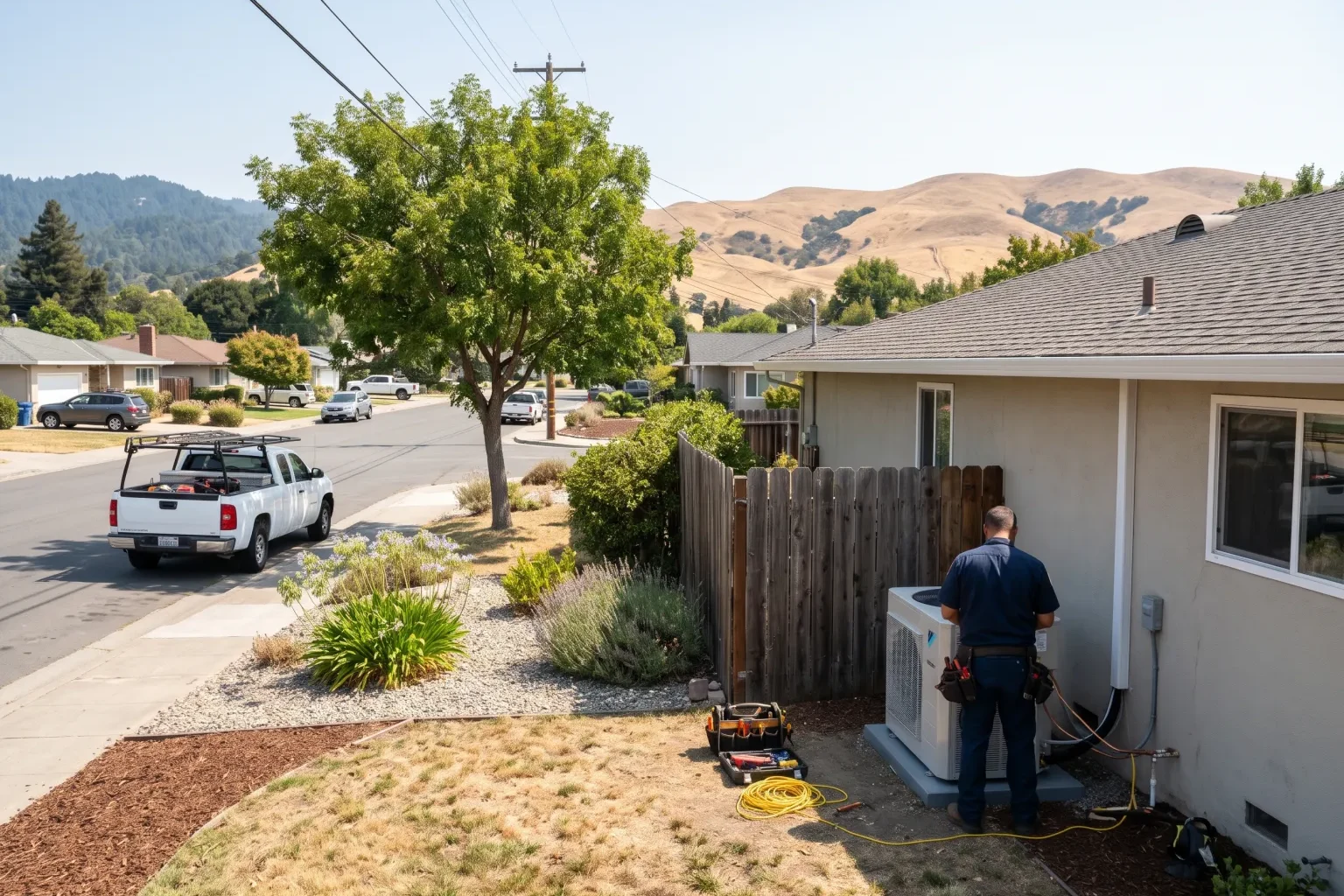
The short answer
A heat pump is worth considering when your furnace or AC is aging or failing, or when you want cooling without running two separate systems. We assess your home's heating and cooling needs, ductwork, and electrical service, then lay out repair and replacement options before quoting anything.
A heat pump heats and cools your home with one system by moving heat from one place to another instead of burning fuel. The Santa Clara Valley's mild, damp winters and dry summers suit heat pumps well. Inland and southern parts of the valley run noticeably hotter in summer than areas near the Bay, so cooling capacity matters as much as heating. PerfectFix HVAC Services installs heat pumps for homeowners in San Jose and nearby cities who are replacing an aging furnace, adding air conditioning for the first time, or upgrading an older heat pump. This page covers how to tell whether a heat pump fits your home, what we look at before recommending equipment, and what to expect from a visit.
Signs It's Time to Consider a Heat Pump
Most homeowners start thinking about a heat pump when something else forces the question. These are the situations we see most often:
Timing also matters. Under Bay Area Air District Rule 9-4, natural gas furnaces manufactured from 2029 must meet a zero-NOx emission standard. In practice, that points homeowners toward heat pumps when they replace a furnace after that date. The Air District rules do not require you to replace working equipment. They apply only when an existing furnace fails or is replaced. Planning ahead means you won't have to make a rushed decision on a cold night when the old furnace quits.
- Your furnace is getting old, needs repeated repairs, or has failed.
- You have no air conditioning, and summer afternoons are hard to live with, especially in hotter inland neighborhoods.
- Your existing AC or heat pump is near the end of its life and struggles to keep up.
- Some rooms run much hotter or colder than the rest of the house.
- You're planning a remodel, solar, or other electrification work and want heating and cooling to be part of the same plan.
- Your energy bills have crept up even though you use the system the same way you always have.
What We Check Before Recommending a System
A heat pump has to be matched to your house. Sizing it from the label on the old unit isn't enough. Before we recommend equipment, we look at:
If your home has no ducts, or has an addition the ducts don't reach, we'll also look at ductless mini-split options for those spaces.
- Heating and cooling load: square footage, insulation, windows, sun exposure, and ceiling heights. This lets us size the system for your home instead of guessing from the old unit.
- Ductwork: its condition, leaks, sizing, and whether the existing ducts can deliver the airflow a heat pump needs.
- Electrical service: panel capacity, open breaker space, and the circuit run to the outdoor unit.
- Outdoor unit placement: clearance, drainage, noise near bedrooms and neighbors, and access for future service.
- Indoor equipment location: attic, garage, closet, or crawlspace, and how condensate will drain.
- Your existing system: which parts can be reused, such as the thermostat wiring or refrigerant line set, and which should be replaced.
Repair, Replace, or Convert: Your Options
If you already have a heat pump that's acting up, a new installation isn't automatically the answer. A failed capacitor, a dirty coil, a refrigerant leak, or a thermostat problem can often be repaired. We'll tell you what's wrong and whether a repair makes sense given the system's age and condition.
When replacement is the better choice, these are the usual options:
We'll explain the tradeoffs of each option in plain terms: comfort, operating cost, and how much work the installation involves. Then you decide.
- Full heat pump system: replaces both the furnace and the AC with a ducted heat pump and an indoor air handler.
- Dual-fuel (hybrid) system: pairs a heat pump with a gas furnace that serves as backup. This can make sense if your furnace is fairly new, but keep the future furnace rules in mind.
- Ductless mini-split: one or more indoor units connected to an outdoor unit. A good fit for homes without ducts or for specific rooms.
- Heat pump replacement: swaps an older heat pump for a newer, more efficient model and reuses the existing ducts if they're in good shape.
What Affects the Cost
We don't quote a price until we've seen your home. The same model can be a simple swap in one house and a much bigger project in the next. These are the main factors:
Bay Area homeowners can check BayREN and their local clean energy provider for current heat pump and electrification incentives. Amounts and availability change with each funding cycle, so we confirm the current offer before including it in a quote. The federal Energy Efficient Home Improvement Credit (25C) only covered qualifying heat pumps placed in service before December 31, 2025. It is not available for new installations.
- System type and capacity
- Efficiency level and features such as variable-speed compressors
- Ductwork repair, sealing, or replacement
- Electrical work, including panel upgrades if capacity is limited
- How easy it is to reach the installation locations
- Number of zones or indoor units for ductless systems
- Permits and inspections required by your city
- Removal and disposal of old equipment
How a Visit Works
First, you tell us about your current system, what's bothering you, and any plans you have, such as solar or a remodel. That helps us send a technician with the right questions in mind.
At the assessment, the technician walks through your home and checks the items listed above: load, ducts, electrical service, and equipment locations. If something is broken, we'll explain it and tell you whether a repair is a reasonable option.
Next, you get a written estimate. It lists the options that fit your home, what each one includes, and any electrical or duct work involved. We'll answer questions and won't pressure you to decide on the spot.
If you go ahead, we handle permits, remove the old equipment, and install the new system. At startup we check refrigerant charge, airflow, and controls, then show you how to use the thermostat and what routine maintenance the system needs.
Heat Pump Installation by city
- Heat Pump Installation in Campbell
- Heat Pump Installation in Santa Clara
- Heat Pump Installation in Los Gatos
- Heat Pump Installation in Milpitas
- Heat Pump Installation in Monte Sereno
- Heat Pump Installation in Saratoga
- Heat Pump Installation in Cupertino
- Heat Pump Installation in Sunnyvale
- Heat Pump Installation in Fremont
- Heat Pump Installation in Mountain View
- Heat Pump Installation in Los Altos
- Heat Pump Installation in Los Altos Hills